How to Test Water Hardness at Home (5 Easy Methods)
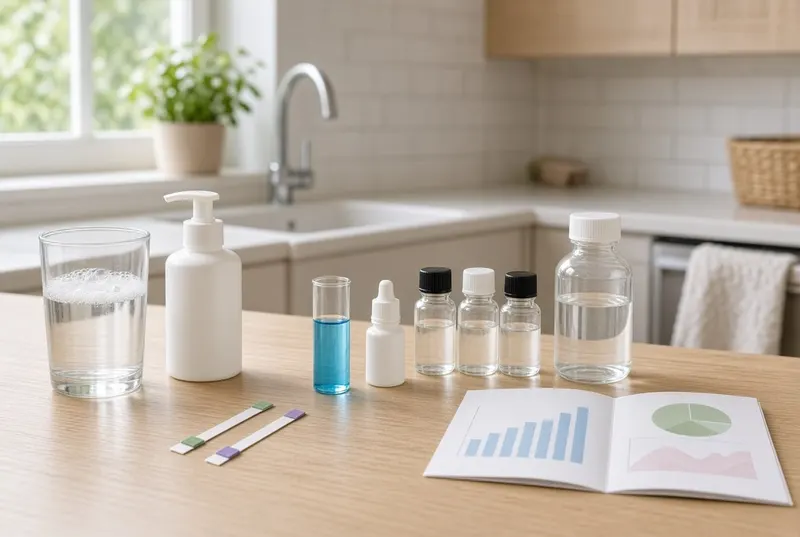
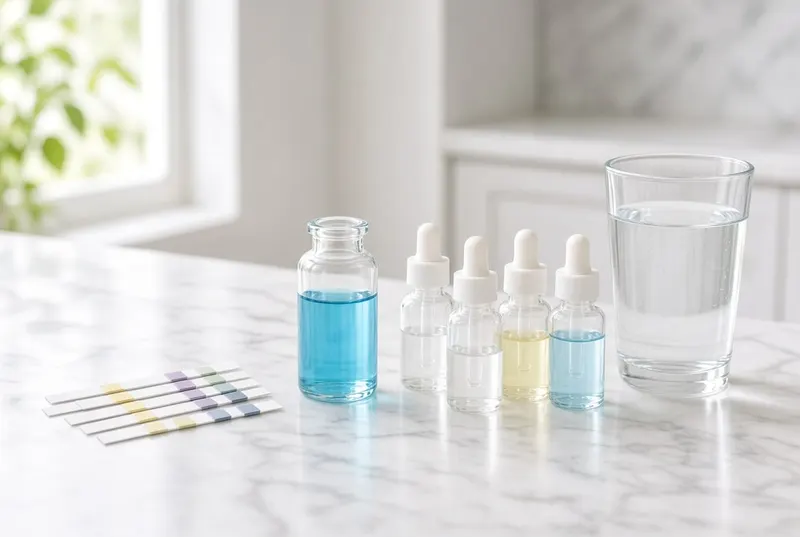
The cheapest way to test water hardness is free: look up your utility's annual water quality report, or try a quick soap test in a bottle. Test strips give you a hardness range in about a minute. A drop titration kit gives an exact number in grains per gallon, and a certified lab test is the best choice for a private well.
Knowing your hardness matters before you spend money. You need the number to size and program a water softener, to protect a tankless water heater, and to decide whether you need treatment at all. This guide walks through five ways to test for hard water at home, from free to precise, and helps you pick the right one.
In this guide
- The 5 Methods at a Glance
- Method 1: Check Your Water Quality Report (Free)
- Method 2: How to Test for Hard Water Without a Kit (Soap Test)
- Method 3: Hard Water Test Strips
- Method 4: Drop Titration Kit
- Method 5: Certified Laboratory Test
- Where to Get an Unbiased Water Test
- What About Free Tests from Water Softener Dealers?
- Why a TDS Meter Won't Tell You Your Hardness
- Which Method Should You Use?
- How to Read Your Result
- Frequently Asked Questions
- Sources
The 5 Methods at a Glance
| Method | Cost | Result | Time | Best for |
|---|---|---|---|---|
| Water quality report | Free | Your utility's number, usually in mg/L | 5 minutes online | City water |
| Soap test | Free | Yes or no | 2 minutes | A first check |
| Test strips | About $8–$15 for 50–100 tests | A range (soft to very hard) | 1 minute | Quick home checks |
| Drop titration kit | About $15–$80 | An exact number in gpg | 5 minutes | Setting a softener |
| Certified lab | About $25–$50 for hardness | A full written report | A few days | Private wells |
Prices are approximate and change often.
Method 1: Check Your Water Quality Report (Free)
If you are on city water, your utility already tests it. Every community water system must publish an annual water quality report, called a Consumer Confidence Report (CCR). You can find yours through the EPA's CCR page or by searching your city name plus "water quality report."
In the report, look for a line called hardness or total hardness, usually given in milligrams per liter (mg/L) or parts per million (ppm), "as CaCO3." Hardness is often listed with other secondary or unregulated measurements, not with the health-based contaminants, because there is no federal health limit for it.
Some reports leave hardness out, and a report may give a range when the utility uses more than one source. If you can't find it, call the utility and ask for the current hardness at your address.
Method 2: How to Test for Hard Water Without a Kit (Soap Test)
The soap test is a rough first check you can do with things you already have. It tells you whether your water is soft or hard, not how hard it is.
- Use a clean, clear bottle with a cap. Fill it about one-third full with cold tap water.
- Add about 10 drops of pure liquid soap, such as unscented castile soap. Don't use dish detergent: detergents are made to foam even in hard water, so they can hide hardness.
- Close the cap and shake hard for about 10 seconds.
- Look at the result. Plenty of foam that lasts, with clear water underneath, points to soft water. Few bubbles and cloudy or milky water point to hard water. The cloudiness is soap scum, which forms when soap reacts with calcium and magnesium.
- Optional: compare with distilled water. Repeat the test with distilled water in a second bottle. The difference makes your result easier to judge.
Method 3: Hard Water Test Strips
Test strips are the easiest way to get a hardness range at home. You dip a strip in a cup of water and match the color of the pad to a chart on the bottle. Most strips read from 0 to about 425 ppm (about 25 gpg). For a comparison of popular kits, see our guide to the best water hardness test kits.
Strips are easy to use badly. For a reliable result:
- Fill a clean cup first. Don't hold the strip under a running tap; the flow can wash the reagent off the pad.
- Use cold water. Strips are made for cold water.
- Don't touch the pads with wet or dirty fingers.
- Read the color on time and in daylight, after the exact wait time printed on the bottle.
- Check the expiry date and keep the bottle closed. Old or damp strips can read too low.
If you get the darkest color on the chart, your water may be harder than the strip can measure. Confirm with a drop kit or a wide-range strip.
Hardness strips also don't detect iron. If you see orange or brown stains, or you are on a private well, test for iron separately: iron can stain fixtures and laundry and reduce how well a softener works.
Method 4: Drop Titration Kit
A drop titration kit gives you an exact number. You fill a small tube with water, add an indicator that turns the sample a color, then add a test solution one drop at a time and count the drops until the color changes. On kits like the Hach Total Hardness Test Kit, Model 5-B, each drop equals 1 grain per gallon.
It takes about five minutes and a little care, but the result is precise to about 1 gpg (17.1 mg/L). That is the precision you need to program a water softener, to check that a softener is working, or to give a number to a tankless water heater installer.
Method 5: Certified Laboratory Test
A lab test is the most complete option. Use it if you have a private well, if you are buying a home, or if you have a health concern about your water. A lab can test hardness together with iron, manganese and contaminants a home kit can't detect.
Only use a laboratory certified for drinking water testing. The EPA keeps a list of state certification programs and certified laboratories, and your local health department can point you to labs near you.
Some problems need special sampling. A rotten-egg smell (hydrogen sulfide) is a gas that can escape from an open container, so ask the lab how to collect that sample before you fill the bottle.
Where to Get an Unbiased Water Test
The most common worry homeowners share is getting a test from someone who isn't trying to sell them a softener. These options don't sell treatment equipment:
- Your county or university extension office. Many extension programs run free or low-cost water testing, or can tell you where to send a sample.
- Your local or state health department. The EPA notes that your local health department may provide private well testing for free. Homeowners describe these results as "just the facts," with no system recommendation.
- An independent state-certified laboratory. Find one through the EPA's list of state certification programs.
- Mail-in lab kits. You fill a sample bottle, mail it back and get the results by email, usually within a week or two. Check that the lab behind the kit is certified, and compare current prices.
What About Free Tests from Water Softener Dealers?
Many softener dealers offer a free in-home test. It can be useful: it is free and quick, and it is usually a drop test, so you get a number. But it is also a sales visit, and some dealers present results in a way that makes a problem look worse than it is.
If you accept one, ask for your hardness in grains per gallon and write it down, don't sign anything the same day, and compare the number with your utility report or your own strip.
Why a TDS Meter Won't Tell You Your Hardness
A cheap TDS (total dissolved solids) meter is often suggested as a quick fix in online forums, but it is the wrong tool. A TDS meter estimates everything dissolved in the water, and hardness is only part of that total. It also can't show whether a softener works, because a softener swaps calcium and magnesium for sodium, so hard and softened water can give almost the same reading. Our test kit guide explains this in more detail.
Which Method Should You Use?
- City water: Start with your water quality report, then use strips to confirm the result at your tap.
- Private well: Get a certified lab test that includes total hardness, iron and manganese, then use strips for routine checks between lab tests.
- You have a softener: Use a drop kit. Test raw water (from an outdoor spigot or with the softener in bypass) and softened water from a cold tap. Our guide on how to check your water softener with test strips covers what the numbers mean.
- Before a tankless water heater: Use a drop kit and share the number with the installer.
How to Read Your Result
Hardness comes in three units. Milligrams per liter (mg/L) and parts per million (ppm) are the same number. One grain per gallon (gpg) equals 17.1 mg/L, so gpg = mg/L ÷ 17.1. Our hardness converter does the math for you.
| Classification (USGS) | mg/L or ppm | gpg |
|---|---|---|
| Soft | 0–60 | 0–3.5 |
| Moderately hard | 61–120 | 3.5–7 |
| Hard | 121–180 | 7–10.5 |
| Very hard | Over 180 | Over 10.5 |
To see what each level looks like day to day, read our guide to the signs of hard water.
How we researched this guide: We based it on guidance from the USGS, the EPA and state consumer-protection officials, on manufacturer instructions, and on the problems homeowners report most often. We did not lab-test these methods ourselves.
Frequently Asked Questions
What is the easiest way to check water hardness?
On city water, the easiest way is to look up your utility's annual water quality report, which usually lists hardness. At home, test strips are the easiest tool: dip a strip in a cup of cold water and match the color in about a minute.
How do you test for water hardness at home without a kit?
Use the soap test. Shake a bottle one-third full of tap water with about 10 drops of pure liquid soap. Lasting foam and clear water suggest soft water; few bubbles and cloudy water suggest hard water. It won't give you a number.
Can I use a TDS meter to test water hardness?
No. A TDS meter measures all dissolved solids, and hardness is only part of that total. It also can't tell you whether a softener is working, because softened water gives a similar TDS reading.
Where can I find my water hardness for free?
If you are on city water, check your utility's annual Consumer Confidence Report, available through the EPA's CCR page or your city's website, or call the utility. If you have a well, ask your local health department or extension office about free or low-cost testing.
How often should I test my water hardness?
On city water, once a year is usually enough, or whenever you notice new scale. If you have a softener, test raw and softened water every few months to make sure it is working. Private well owners should test at least once a year.
Sources
- U.S. EPA — Consumer Confidence Reports
- U.S. EPA — Private Drinking Water Wells
- U.S. EPA — Certified laboratories for drinking water
- U.S. Geological Survey — Hardness of water
- Florida Attorney General — How to Protect Yourself: Water Treatment Devices
- Hach — Total Hardness Test Kit, Model 5-B instructions
- University of Nebraska–Lincoln Extension — Drinking Water: Hard Water (G1274)