Topic · WT
How to Test Your Home Water
How to test the water in your home, from hardness strips and drop kits to TDS meters and certified lab tests, and how to read the results.
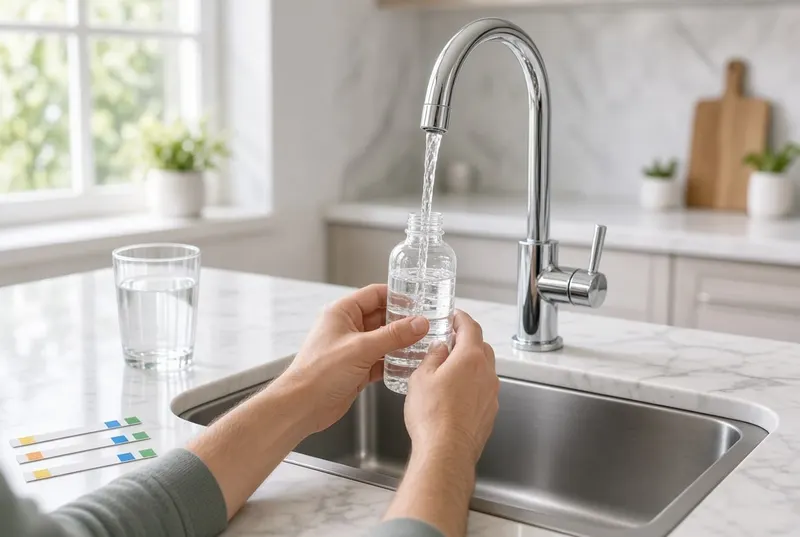
Testing is the first step before you buy any water treatment. A softener, a filter or a reverse osmosis system only makes sense once you know what is actually in your water.
Start with the free information
If you are on city water, your utility already tests it. Every community water system in the United States must publish an annual water quality report, called a Consumer Confidence Report (CCR), by July 1 each year. Most reports list hardness, and all of them list the regulated contaminants that were detected.
If you have a private well, nobody tests it for you. The EPA does not regulate private wells, so testing is the owner's job.
The four ways to test at home
| Method | What it measures | Best for |
|---|---|---|
| Test strips | A range for hardness, chlorine, pH and more | A quick first check |
| Drop (titration) kits | An exact hardness number in gpg | Setting up a water softener |
| TDS meters | Total dissolved solids, not hardness | Checking a reverse osmosis filter |
| Certified lab tests | Many contaminants, with documented methods | Private wells, health concerns, proof for a sale |
Which test do you need?
- You only want to know if your water is hard: strips are enough. Start with our guide to water hardness test kits.
- You own a softener: use a drop kit, so you can program it with a real number.
- You worry about lead, bacteria or nitrates: use a certified laboratory. Home strips are not reliable enough for health decisions.
Once you have a number, our hardness converter switches between gpg and mg/L and shows where your water sits on the USGS scale.